Rules of Singular and Plural
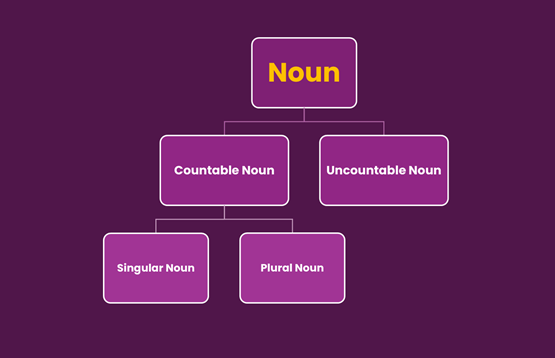
Singular and Plural Nouns
Concept: Singular and Plural Nouns (एकवचन और बहुवचन)
Singular nouns refer to one (एकवचन एक को दर्शाता है), while plural nouns refer to more than one (बहुवचन एक से अधिक को दर्शाता है). Learning how to change singular nouns into plural nouns is essential for basic grammar. Here are some common rules (सामान्य नियम):
Rule 1: Add "s" to the singular noun to form the plural.
(नियम 1: अंत में "s" जोड़ें)
Rule 2: If the noun ends with s, ss, sh, ch, x, or z, add "es" to form the plural.
(नियम 2: यदि नाम s, ss, sh, ch, x, या z पर समाप्त हो, तो "es" जोड़ें)
Rule 3: If the noun ends with "o" and there's a consonant before "o", add "es".
(नियम 3: अगर "o" से पहले व्यंजन है तो "es" जोड़ें)
Rule 4: If the noun ends with "o" and there's a vowel before "o", add "s".
(नियम 4: अगर "o" से पहले स्वर है तो "s" जोड़ें)
Rule 5: If the noun ends with "y" and there's a consonant before "y", replace "y" with "ies".
(नियम 5: अगर "y" से पहले व्यंजन है, तो "y" को "ies" से बदलें)
Rule 6: If the noun ends with "y" and there's a vowel before "y", add "s".
(नियम 6: अगर "y" से पहले स्वर है, तो "s" जोड़ें)
Rule 7: If the noun ends with "f" or "fe", replace "f" or "fe" with "ves".
(नियम 7: "f" या "fe" को "ves" में बदलें)
Rule 8: Some nouns change spelling completely in their plural form (must memorize these).
(नियम 8: कुछ संज्ञाएँ अपने बहुवचन रूप में पूरी तरह से बदल जाती हैं)
Rule 9: Some nouns remain the same in both singular and plural forms; these are uncountable nouns.
(नियम 9: कुछ संज्ञाएँ एकवचन और बहुवचन दोनों में समान रहती हैं)
30 Important Exceptions
Tap on any word to hear its pronunciation.
| Hindi | Singular | Plural |
|---|